

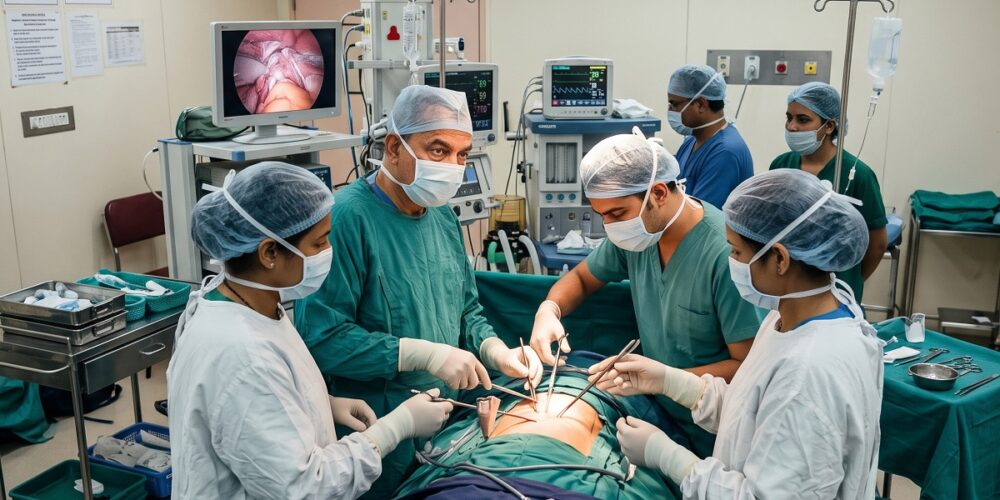
Advanced Gastrointestinal Surgery for Better Digestive Health
Gastrointestinal surgery focuses on diagnosing and treating conditions affecting the digestive system, including the oesophagus, stomach, small intestine, large intestine, rectum, and related abdominal organs. Depending on the patient’s condition, treatment may involve conventional open surgery, minimally invasive laparoscopic procedures, or other appropriate surgical approaches. Gastrointestinal surgery may be recommended for conditions such as hernias, appendicitis, gallbladder disease, intestinal obstruction, and selected gastrointestinal tumours. The primary aim is to address the underlying condition, relieve symptoms where possible, and support the patient’s overall health and well-being.
At Ahmedabad Laparoscopy Surgical Hospital, we emphasise thorough clinical evaluation, appropriate diagnostic investigations, and personalised treatment planning for patients requiring gastrointestinal surgical care. Our approach considers the patient’s symptoms, medical history, diagnosis, and overall health before determining a suitable treatment option.
Benefits of Gastrointestinal Surgery
Treatment of Digestive Conditions
01
Relief from Persistent Symptoms
02
Minimally Invasive Treatment Options
03
Personalised Treatment Approach
Surgical planning considers the patient's diagnosis, overall health, and individual needs to support appropriate treatment and recovery.
04
Why Choose Us for Gastrointestinal Surgery?
At Ahmedabad Laparoscopy Surgical Hospital, we focus on providing patient-centred gastrointestinal surgical care through careful clinical assessment and personalised treatment planning.
- Experienced Medical or Surgical Team
- Advanced Surgical Techniques
- Personalised Treatment Plans
- Patient-Focused Care
Types of Gastrointestinal Surgery
Gastrointestinal surgery includes a range of procedures for conditions affecting the digestive tract and related abdominal organs.
Gastrointestinal Surgery vs. Open Surgery
| Feature | Laparoscopic Surgery | Traditional Open Surgery |
|---|---|---|
| Surgical Approach | Uses a camera and specialised instruments through small incisions | Typically involves a larger incision to access the surgical area |
| Incisions | Usually involves several small incisions | Usually involves a larger incision |
| Scarring | Scars may be smaller and less noticeable | Scarring may be more noticeable |
| Post-Surgery Discomfort | May involve less discomfort in suitable procedures | Discomfort may vary with the procedure and incision |
| Recovery Time | May allow faster recovery for certain procedures | Recovery may take longer for some procedures |
| Hospital Stay | May allow an earlier discharge in selected cases | Hospital stay depends on the procedure and recovery |
| Surgical Visibility | Provides a magnified camera view of internal structures | Allows direct visual and manual access to the surgical area |
| Suitability | Depends on the condition, procedure, and clinical circumstances | May be preferred for certain complex cases or emergencies |
Frequently Asked Questions About Gastrointestinal Surgery
Q1. What is gastrointestinal surgery?
Gastrointestinal surgery involves procedures to diagnose or treat conditions affecting the digestive system, including the stomach, intestines, colon, rectum, and related abdominal organs. Depending on the condition, treatment may involve laparoscopic or open surgery.
Q2. What are the benefits of gastrointestinal surgery?
Gastrointestinal surgery may treat certain digestive conditions, relieve symptoms, remove diseased tissue, or address complications such as intestinal obstruction. Potential benefits depend on the diagnosis, procedure, and the patient’s overall health.
Q3. Is laparoscopic gastrointestinal surgery better than open surgery?
Neither approach is universally better. Laparoscopic surgery may offer smaller incisions and potentially faster recovery for selected procedures, while open surgery may be more appropriate in certain complex situations. The surgeon determines the suitable approach based on clinical findings.
Q4. Is gastrointestinal surgery safe?
Gastrointestinal surgery is commonly performed when medically indicated, but every surgical procedure carries potential risks, including bleeding, infection, and complications related to anaesthesia. Your surgeon will explain the expected benefits, possible risks, and alternatives based on your condition.
Q5. How long does recovery take after gastrointestinal surgery?
Recovery varies according to the type of procedure, surgical approach, overall health, and whether complications occur. Some patients recover within a few weeks, while more complex procedures may require longer. Your medical team will provide individual recovery instructions.
Q6. How long will I need to stay in the hospital after gastrointestinal surgery?
Hospital stay depends on the procedure, the patient’s condition, and post-operative progress. Some minimally invasive procedures may allow discharge on the same day or after a short stay, while major gastrointestinal surgery may require several days of hospital care.
Q7. Which conditions can be treated with gastrointestinal surgery?
Gastrointestinal surgery may be used to treat selected cases of appendicitis, gallbladder disease, hernias, intestinal obstruction, colorectal conditions, stomach disorders, and gastrointestinal tumours. Treatment depends on an accurate diagnosis and assessment by a qualified medical professional.
Q8. Will gastrointestinal surgery leave scars or cause discomfort?
Surgical scars and post-operative discomfort depend on the procedure and whether laparoscopic or open surgery is performed. Laparoscopic procedures usually involve smaller incisions, but healing and scar appearance vary. Your surgeon will explain wound care and pain management after surgery.
PATIENT-CENTRED SURGICAL CARE
Ahmedabad Laparoscopy Surgical Hospital
Advanced Surgical Care. Compassionate Patient Support.
At Ahmedabad Laparoscopy Surgical Hospital, we are committed to providing patient-focused surgical care through modern techniques, personalised treatment planning, and dedicated medical support. Connect with our team to learn more about our surgical services and find the right next step for your healthcare needs.
Your Health, Our Commitment.
All Services
Book Your Consultation
Have questions about our surgical services? Contact our team to discuss your healthcare needs and get guidance on the next steps.